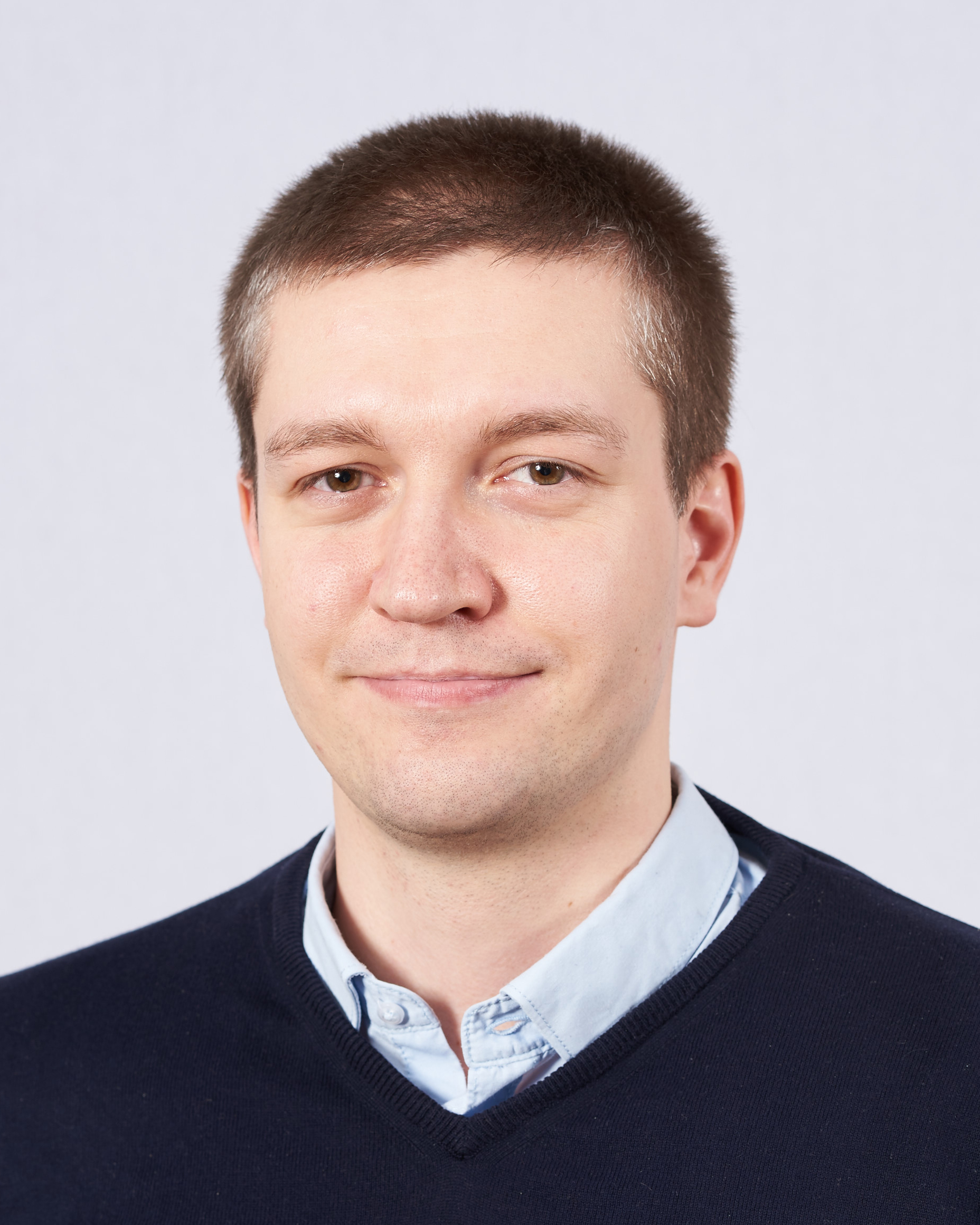
Mohamed Abdelrahman shares his journey as a PhD student in the Data Systems Group at the University of Tartu, where he focuses on Automated Machine Learning (AutoML) and aims to make AI more trustworthy and accessible. His story was introduced by Professor Jaak Vilo, Head of the Institute of Computer Science.
Describe your thoughts when first arriving in Estonia.
When I first arrived in Estonia, I didn’t only cross borders between countries, I crossed a boundary between who I was and who I wanted to become. Coming from the Middle East, carrying my academic dreams, my research ideas, and a silent ambition to make a change through technology, I found in the University of Tartu not just a university, but a second home for curiosity, experimentation, and becoming.
It is here, in the Delta Centre, surrounded by people who believe in the power of data and knowledge, that I decided to continue my journey as a PhD student in the Data Systems Group at the Institute of Computer Science. I previously completed my Master’s degree in Data Science at the University of Tartu with a CGPA of 5.0 out of 5.0, graduating as one of the top achievers in my batch. It was an experience that deeply strengthened my commitment to continue my academic path here.
What brought you to the University of Tartu, specifically to the Institute of Computer Science and the Data Systems Group?
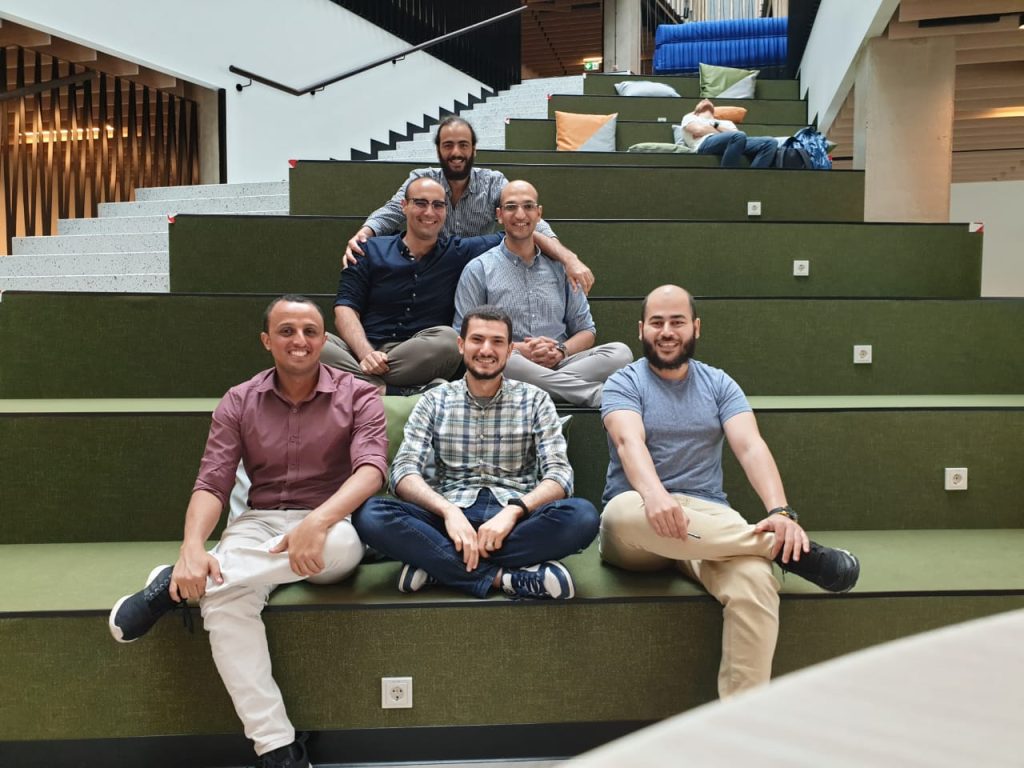
I still remember the first time I read about the University of Tartu. I was looking for a place that does not only teach computer science, but lives it. I wanted a university that respects deep thinking, values independence, and gives space for research ideas to grow, even if these ideas are still messy and unfinished.
Estonia fascinated me. It is a small country with a big digital vision. A place that believes in e-government, data-driven decisions, and technological innovation as a way of life, not a privilege. That mindset matched the way I was thinking. I didn’t want to be just a data scientist who writes code. I wanted to be someone who shapes how intelligent systems are designed, automated, and trusted in real-world environments.
The Institute of Computer Science, especially, felt like the perfect fit. Multiple research groups with a focus on scalable machine learning systems, automation, transparency, and responsible AI reflected exactly the kind of problems I care about. I didn’t want only to train models. I wanted to understand how they behave, why they make decisions, and how to make them useful for society. You can get a huge knowledge easily by just listening to the day-to-day discussions and seminars from the open and inspiring research community at the university.
That is why choosing Tartu was never only an academic choice. It was a personal one.
How is your PhD research connected to the group’s vision?
My current PhD research focuses on Automated Machine Learning (AutoML) and on building systems that not only predict, but also behave in a more calibrated and reliable way.
One key direction of my work is building the first automated post-hoc calibration engine for machine learning classification models. In simple words, I try to reduce overconfidence in AI systems. Many models today are very “confident” but sometimes very “wrong”. My work tries to solve this problem at scale, automatically, without requiring deep human intervention each time.
This connects strongly with the main interests of the Data Systems Group and the Institute of Computer Science:
- AutoML: making machine learning accessible and efficient
- Explainability: improving trust and understanding
- Streaming & time-series data: supporting real-world dynamic systems
- Green computing: reducing computational waste
- Privacy & federated learning: improving decentralization and data safety
Over the past years, I have published more than ten papers in top venues and dedicated my time to building research that combines theory with real applications. Today, my work has over 500 academic citations, a milestone that still feels unreal to me, and most of this work has been developed right here at the University of Tartu.
What have been your biggest challenges?
Of course, the journey has not always been easy.
For someone coming from a region full of sun and warm skies, the Estonian winter was a real challenge. The long absence of sunlight, the silent streets covered in snow, and the short days sometimes made me feel as if time itself was frozen. There were days when the darkness outside felt like it was trying to enter my thoughts too.
But strangely, this same darkness taught me discipline, resilience, and deep focus.
In the moments when the sun disappeared, my ideas started to shine more clearly. I learned how to sit for long hours, how to stay inside my world of data, formulas, research papers, and design ideas. The winter, instead of stopping me, trained me.
How do you stay motivated and productive?
In Tartu, I built small rituals.
I spend most of my time between the Delta Centre, the library, and quiet cafés scattered around the city. I am a late-evening thinker, but a morning planner. I usually start my day with a simple coffee, a notebook, and a list of realistic goals.
When I feel stuck, I go for a walk near the Emajõgi River. Something about the silence of the water and the historical buildings around it gives me clarity again.
I also believe deeply in learning from others. I attend seminars, read different fields outside my research, and always try to connect research to real life: healthcare, smart cities, energy, and human decision-making.
Staying motivated is not about being perfect. It is about continuing even when it’s hard.
What has Estonia taught you about research culture?
One of the most beautiful things I discovered in Estonia is the culture of intellectual humility.
In many places, smart people want to be “seen” as smart. In Estonia, people are smart, but they don’t need to prove it. Professors and researchers are approachable. Discussions are deep but respectful. No one tries to make you feel small.
Here, your ideas matter. Even if you are a student. Even if your English is not perfect. Even if you come from far away.
This culture shaped my confidence and my collaborations. It made me more open, more reflective, and more willing to take intellectual risks.
What advice would you give to new students who want to enter this field?
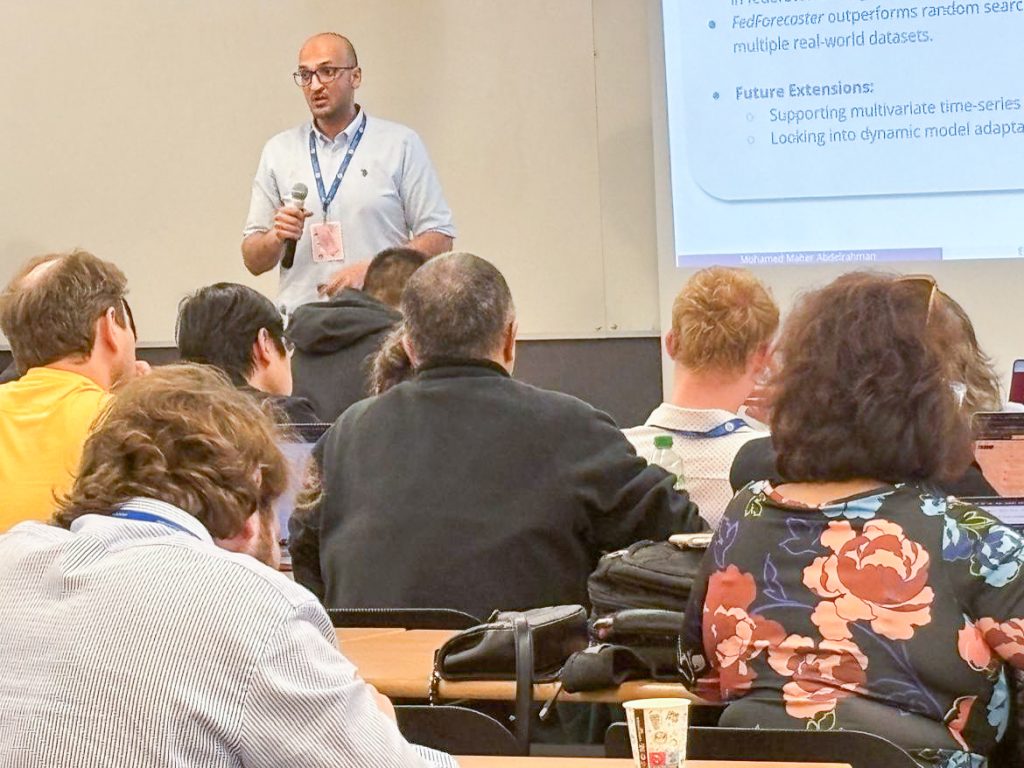
If you are a Bachelor’s, Master’s, or early PhD student dreaming about data science, big data, or explainable AI, my advice is simple:
Do not wait until you feel “ready”. You will never feel ready.
Start where you are. Read papers even when you don’t understand all of them. Implement things that already exist. Break models and rebuild them. Ask questions. Be uncomfortable. Being lost sometimes means you are in the right place.
And choose an environment like the University of Tartu, a place that gives you knowledge, but also gives you space to grow into yourself.
What’s the most memorable thing you’ve discovered in Tartu?
One of the most surprising moments for me was my first real snowfall in Tartu.
It was completely silent. No cars, no voices, no noise. Just snow falling in the yellow streetlight at 3 a.m. I stood there, alone, in the middle of the street, and felt something between loneliness and peace.
That moment taught me something simple but powerful: Silence is not emptiness. Sometimes, it is clarity.
And in that quiet city, in that cold air, my mind became warmer with ideas than ever before.
Tartu did not just shape my research. It shaped my character.
And for that, I will always be grateful.
You can familiarize yourself with Mohamed’s work through the following links
Google Scholar: https://scholar.google.com/citations?user=IW32looAAAAJ&hl=en